Two SAR ship benchmarks, two different jobs. SSDD is the small-chip sanity check (~90% held-out). HRSID (Wei et al., IEEE Access 2020) is the larger, higher-resolution set: 5,604 800×800 chips, 16,951 ships, Sentinel-1B / TerraSAR-X / TanDEM-X, 0.5–3 m.
oriented-det v0.3 loads it natively (dataset.format: hrsid). A full Faster R-CNN 1× finetune from the DOTA Hub reached 78.55% mAP50 on official held-out test — rotated IoU on min-area rectangles. There is no HRSID Hub slug.
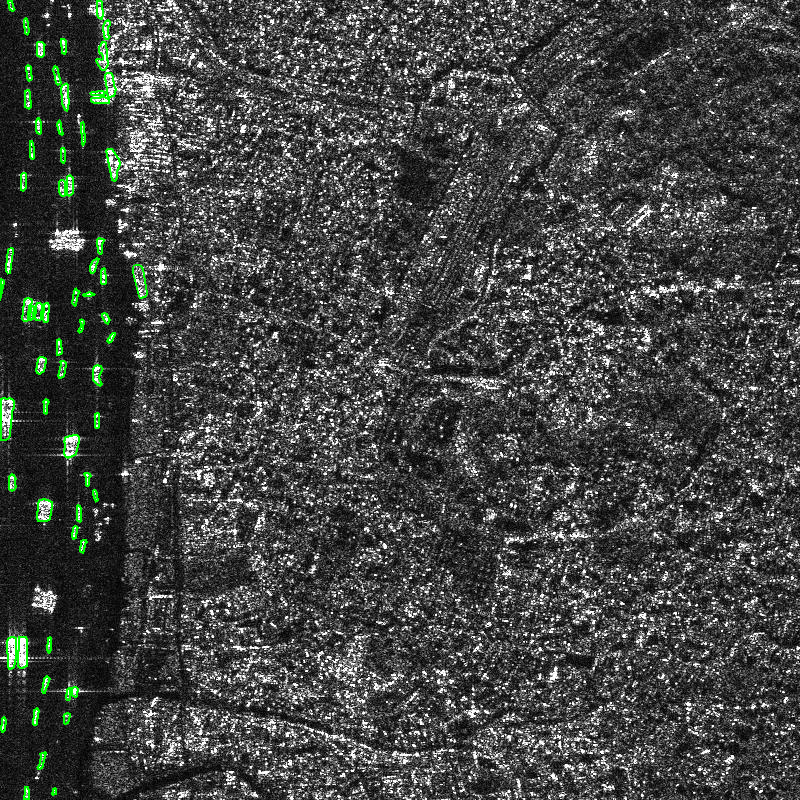
The dataset Link to heading
Official 65/35 train/test. No val — recipes evaluate on test. MS COCO polygons → le90 rbox (n-gons use min-area rectangle). Point data_root at HRSID_JPG (JPEGImages/ + annotations/*2017.json). Whole-image keep-ratio 800 + pad-32. No tiling (chips are already 800×800). Native training does not need odet coco-to-dota.
odet train --config configs/rotated_faster_rcnn/hrsid_le90_1x.json
make eval-val EXPERIMENT=runs/rotated_faster_rcnn/<timestamp>
Oriented R-CNN / FCOS 1× recipes exist; those trains are not yet run. No HRSID notebook — this post is the tutorial.
| SSDD | HRSID | |
|---|---|---|
| Chips | 1,160 | 5,604 |
| Canvas | keep-ratio 608 | keep-ratio 800 |
| Split | last-digit train/test | official 65/35 (no val) |
| Local FRCNN 1× | 90.34% | 78.55% |
| Hub | none | none |
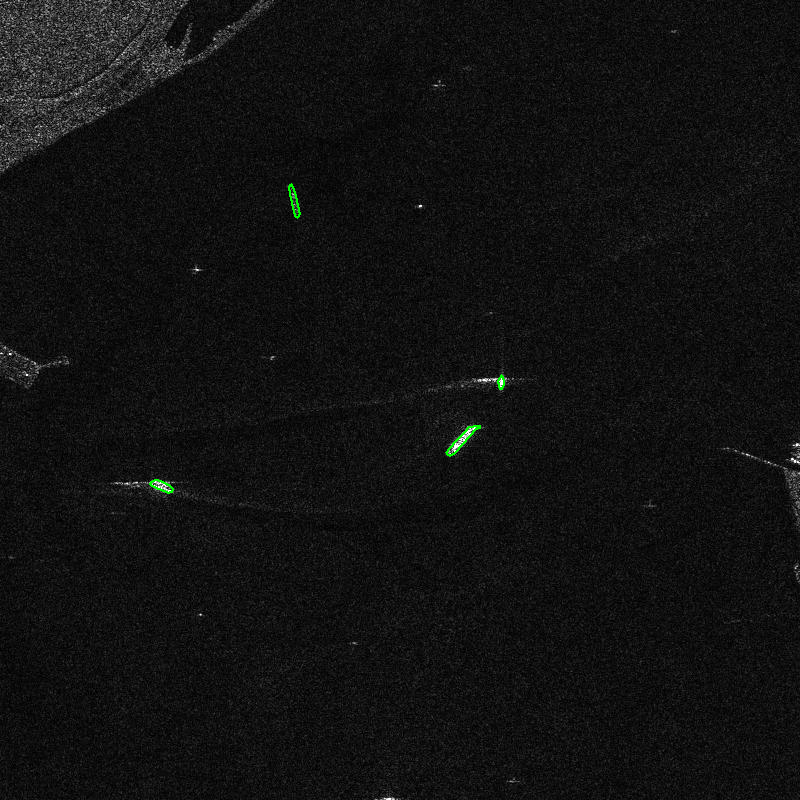
Local 1× Faster R-CNN: 78.55% Link to heading
From hf://rotated_faster_rcnn_dota_le90_1x (1-way ship head re-init), RTX 3090 Ti, 1h 32m (runs/rotated_faster_rcnn/20260918-134544). Held-out test: 1,962 chips, 5,918 ships. Score ≥ 0.05, rotated IoU 0.50, NMS IoU 0.10. Report: docs/eval-reports/rotated_faster_rcnn_hrsid_le90_1x/.
| Epoch | Train loss | In-train val mAP50 (score ≥ 0.3) |
|---|---|---|
| 4 | 0.290 | 70.71% |
| 8 | 0.270 | 69.94% |
| 12 | 0.245 | 71.53% |
make eval-val (score ≥ 0.05) is 78.55% — same checkpoint. The 0.3 in-train floor drops many true positives (recall 0.83 at 0.05 vs GT cover 79% at 0.3). That is a threshold, not a collapsed run. Best-F1 deploy threshold on that sweep is 0.60 (P 0.90 / R 0.74 / F1 0.81). Mean best IoU vs GT is 0.68.
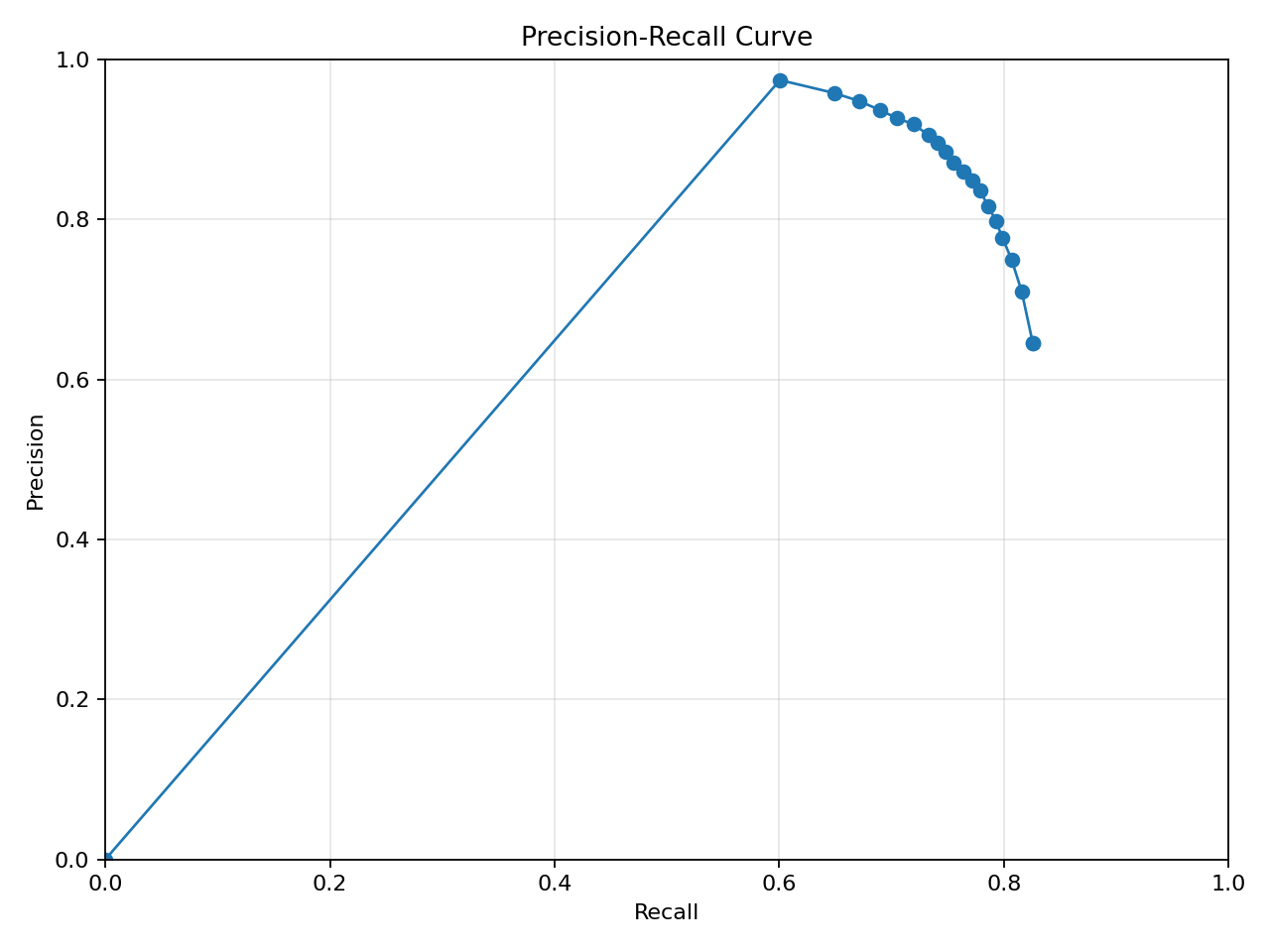
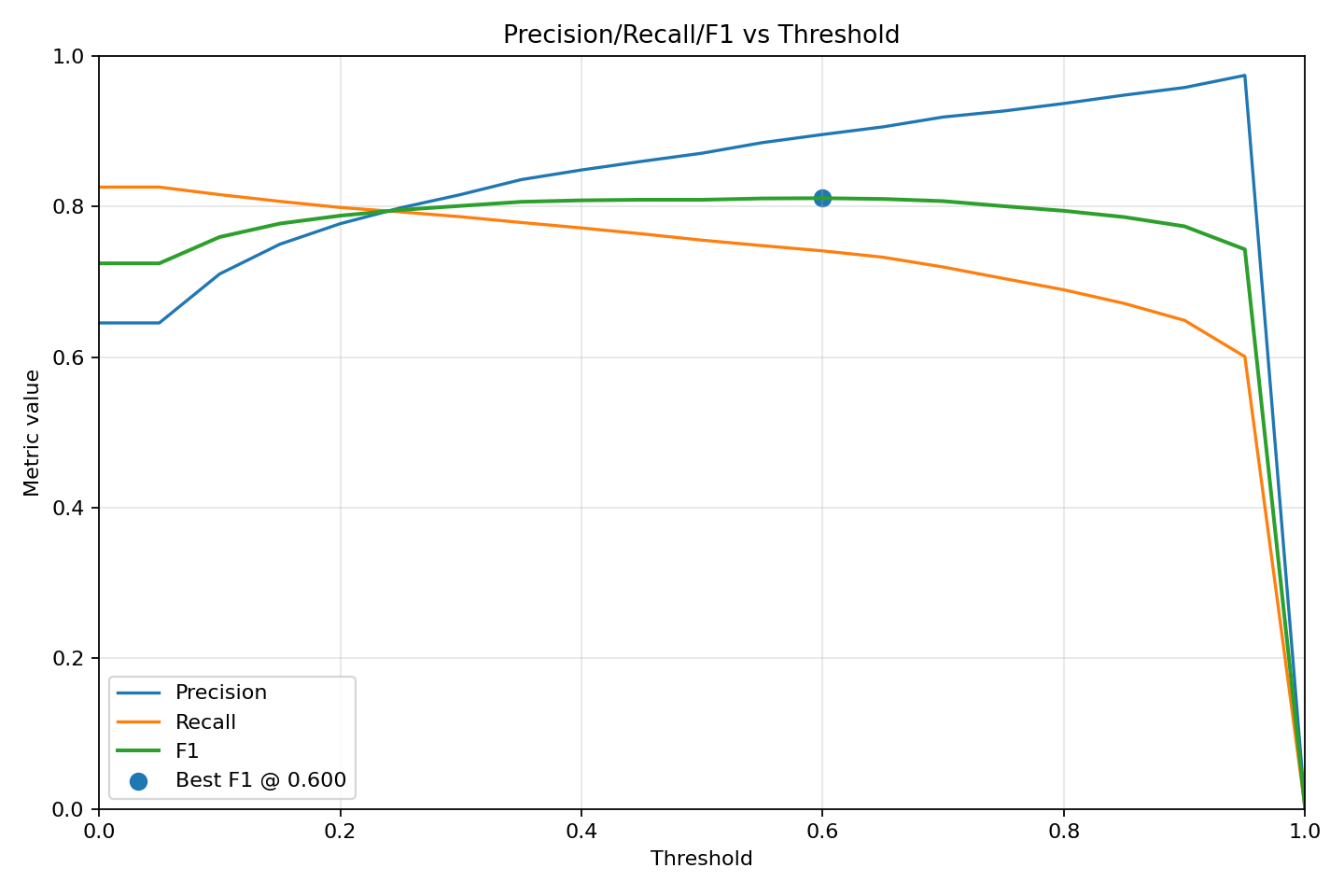
Treat <70% eval-val as a failed train. Healthy rotated AP50 lives in the high 70s–mid 80s.
Do not mix with Wei HBB Link to heading
Wei et al. (IEEE Access 2020, Table 4) report horizontal bbox AP on official 65/35 test: SOTA two-stage >84.7% AP50. That protocol is COCO HBB, not OrientedDet rotated IoU on min-area rectangles. Oriented boxes are a stricter — and more operational — metric when heading matters.
Links Link to heading
- HRSID · docs — HRSID
- v0.3 release note · SSDD
- Previous: SSDD
- Next: Docker deploy (5 Oct)