I put two detectors on the same MacBook and the same pictures.
FCOS is the one I reach for when I want a quick look: it trains in about eight hours on the L4 recipe, it runs happily on Apple Silicon, and the score to start with is 0.20. Official Task 1 is 73.07%.
Oriented R-CNN is the one I reach for when the box has to be right. Task 1 is 76.73%, and the score to start with is 0.55. It takes about a day and a half to train.
The pictures, the timings, and the commands are below.
What we compare Link to heading
| Oriented R-CNN 1× | Rotated FCOS 1× | |
|---|---|---|
| Hub slug | oriented_rcnn_dota_le90_1x | rotated_fcos_dota_le90_1x |
| Official Task 1 AP50 | 76.73% | 73.07% |
| Architecture | two-stage (RPN + oriented RoIAlign) | one-stage, anchor-free |
| Parameters | 41.3M | 36.2M |
| Checkpoint size | 315 MB | 276 MB |
| 1× train wall (NVIDIA L4) | 1d 12h 22m | 7h 59m (~4.5× faster) |
| Mean epoch (incl. periodic mAP) | ~3h 1m | ~40m |
Both are ResNet-50 + FPN, DOTA le90, train+val pretrain. Published scores are official Task 1, not local val.
Inference numbers below: Apple M1 Max, 64 GB unified memory, PyTorch 2.13.0, oriented-det 0.2.0, --device mps. Protocol: deploy score floors, merge NMS IoU ≤ 0.1. Training wall times come from the Hub run logs on a single NVIDIA L4 (see below).
Quick start Link to heading
From an oriented-det checkout with the usual macOS install (uv pip install torch torchvision then uv pip install -e .):
odet pretrained download rotated_fcos_dota_le90_1x
odet pretrained download oriented_rcnn_dota_le90_1x

odet image-demo demo/demo.jpg hf://rotated_fcos_dota_le90_1x \
  --out-file demo_fcos.png \
  --device mps \
  --score-thr 0.20 \
  --nms-thr 0.1
Swap the slug for Oriented R-CNN and use --score-thr 0.55. Keep --nms-thr 0.1.
Bus lot: same scene as the June demo Link to heading
demo/demo.jpg is the 1024×1024 DOTA tile from the macOS walkthrough — diagonal buses and trucks, the scene where axis-aligned boxes look silly.
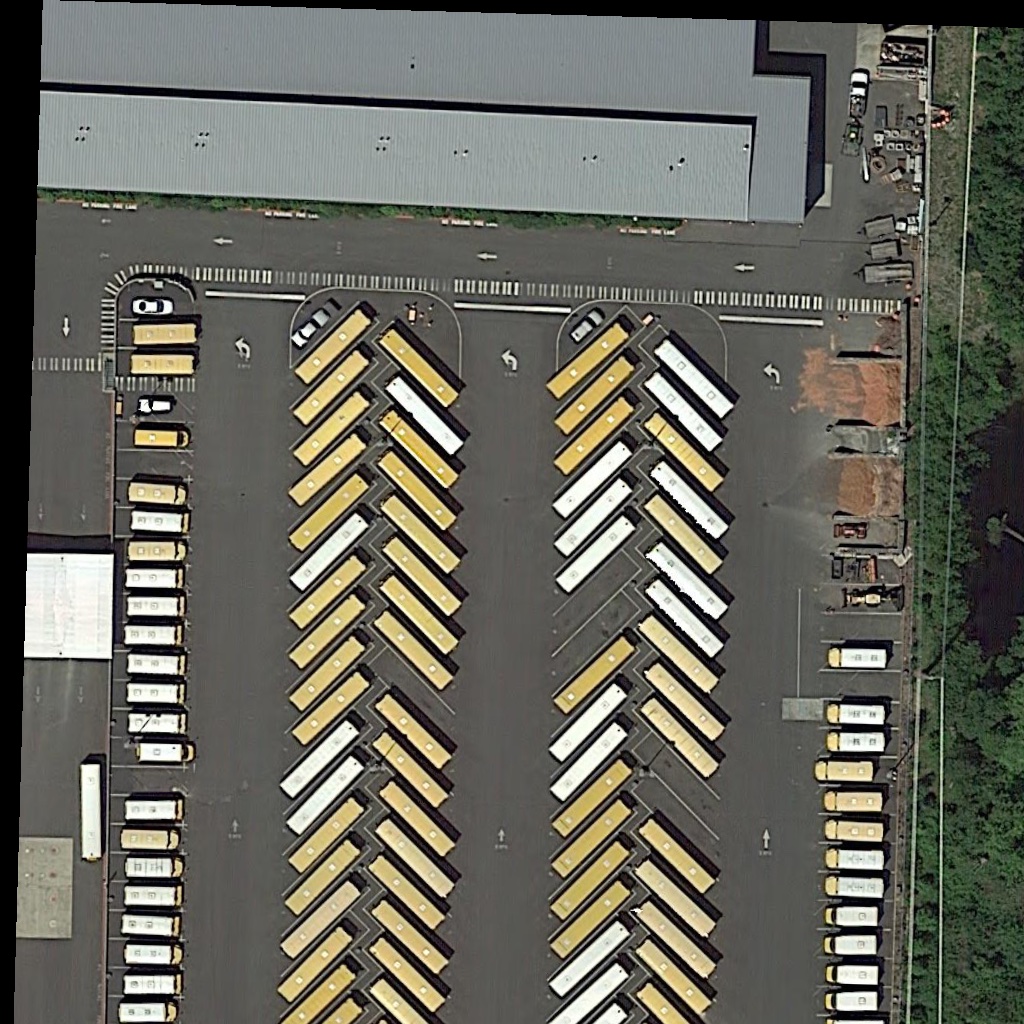
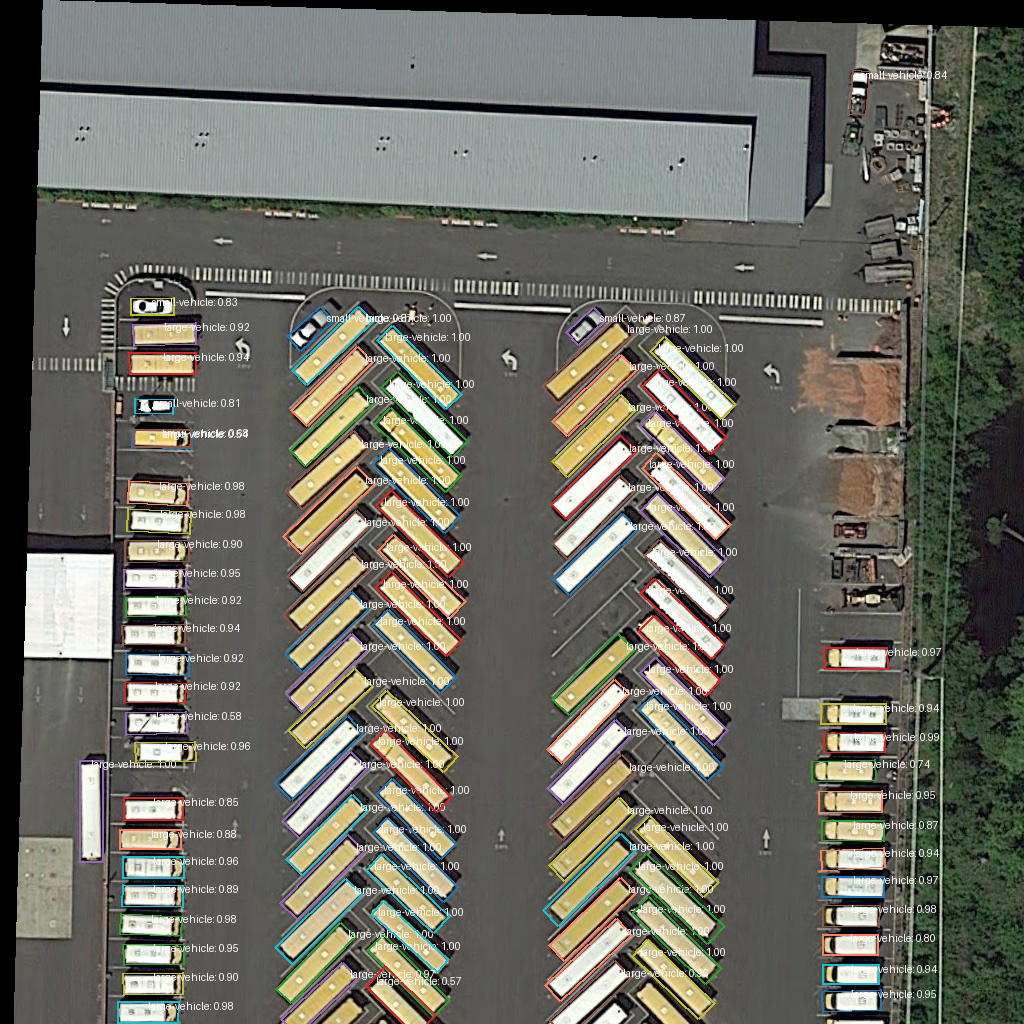
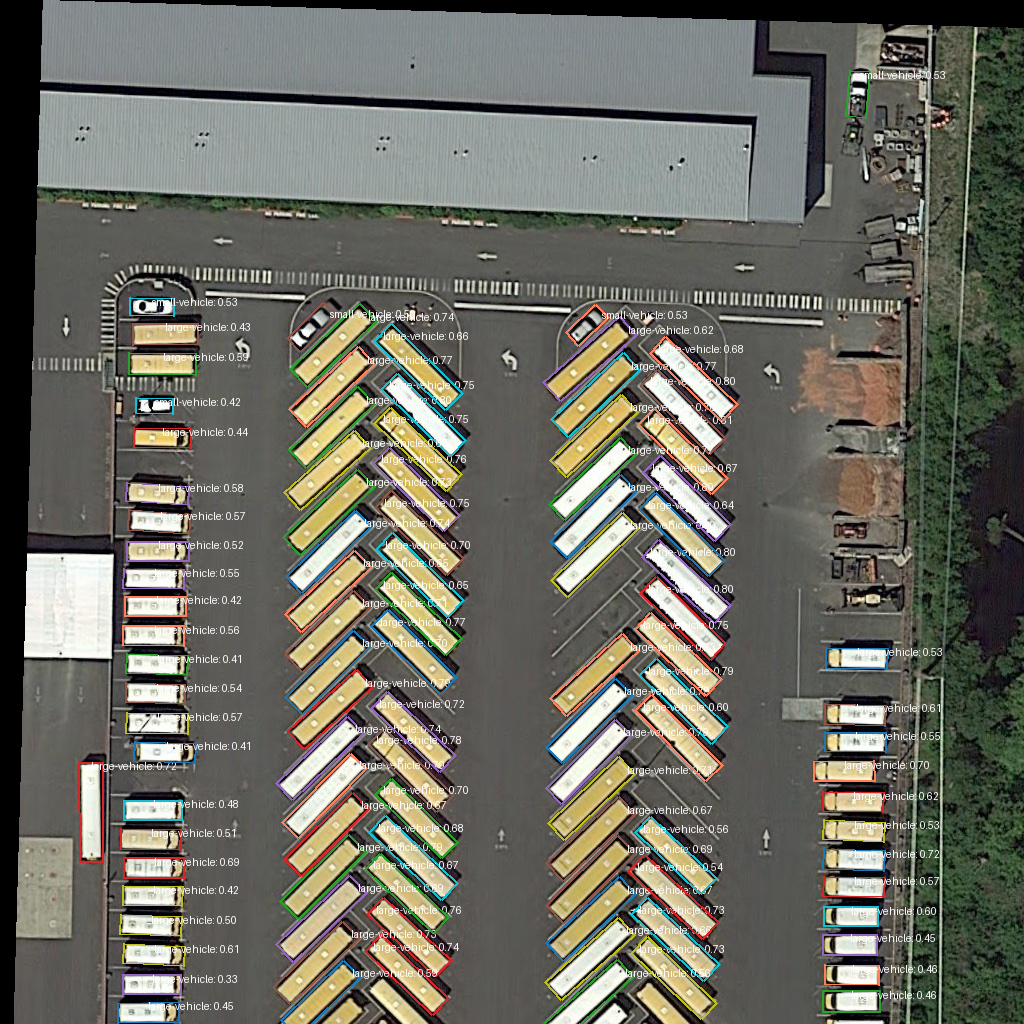
Box geometry looks right on both: headings follow the chevron parking, large-vehicle / small-vehicle labels match. The visible difference is score calibration — Oriented R-CNN piles many boxes near 1.00; FCOS spreads them across a wider band. That is expected for a one-stage sigmoid head versus a two-stage ROI classifier, but it changes which CLI threshold you want.
Score thresholds: do not copy a two-stage --score-thr onto FCOS
Link to heading
The June post uses --score-thr 0.55 for Oriented R-CNN (the Hub deploy floor). A stricter overlay such as 0.7 still works on that family. On FCOS it does not: a two-stage threshold hides most of the scene.
| Detector | Deploy --score-thr | Why |
|---|---|---|
| Rotated FCOS 1× | 0.20 | sigmoid head; F1 peaks near 0.25 on the local val sweep |
| Oriented R-CNN 1× | 0.55 | peaked two-stage scores |
For FCOS demos, start at 0.20. For Oriented R-CNN, 0.55. Keep NMS at 0.1.
Latency on MPS Link to heading
Timed after warmup; mean of 5 single-forward runs (or 3 for the tiled harbor). Canvas 1024×1024, ORIENTED_DET auto window batch 32 on MPS.
| Image | Windows | Oriented R-CNN | Rotated FCOS | Speedup |
|---|---|---|---|---|
| Sparse DOTA tiles (avg of 4) | 1 | 0.38 s | 0.20 s | ~1.9× |
demo.jpg (dense vehicles) | 1 | 0.48 s | 0.42 s | ~1.15× |
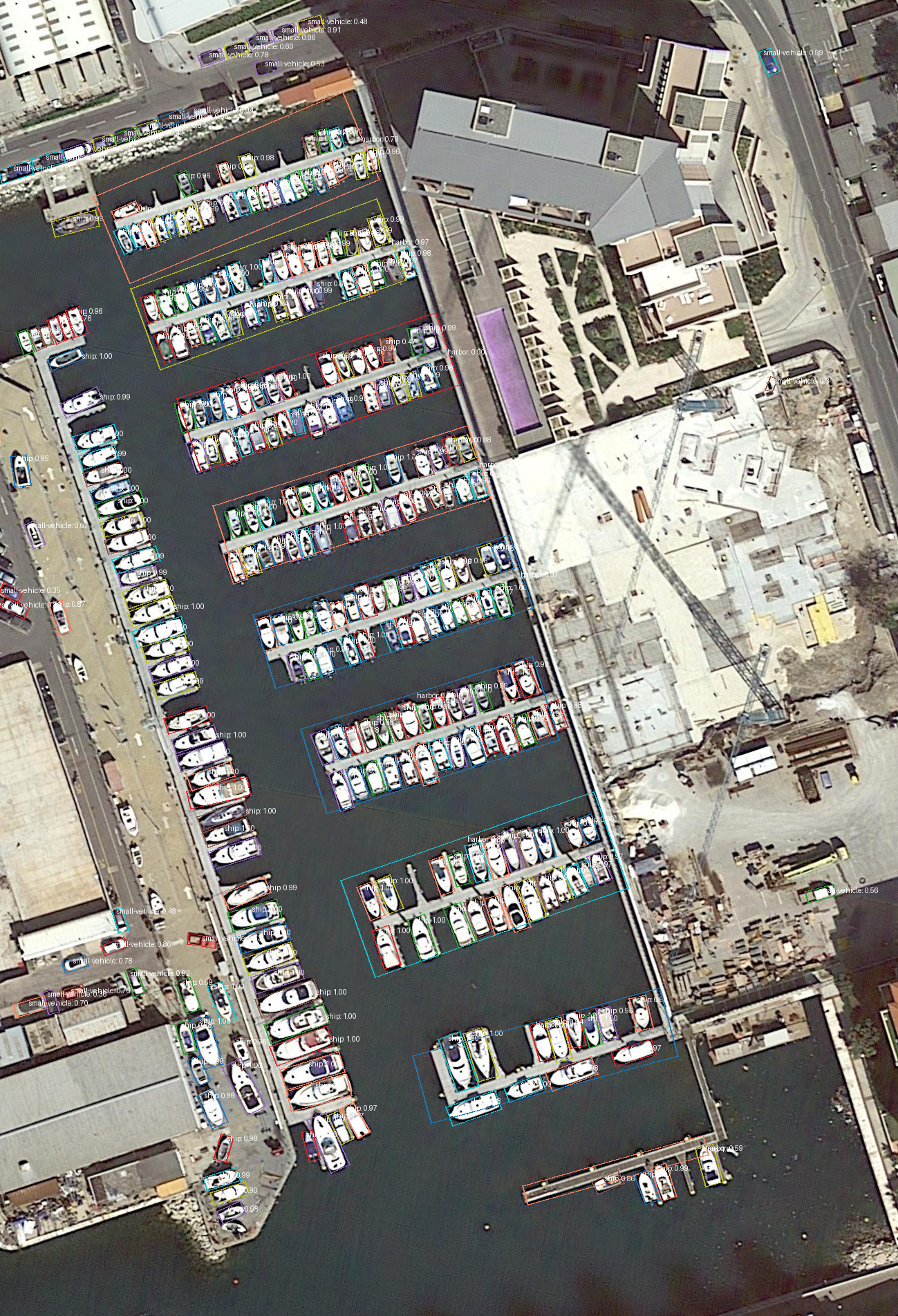
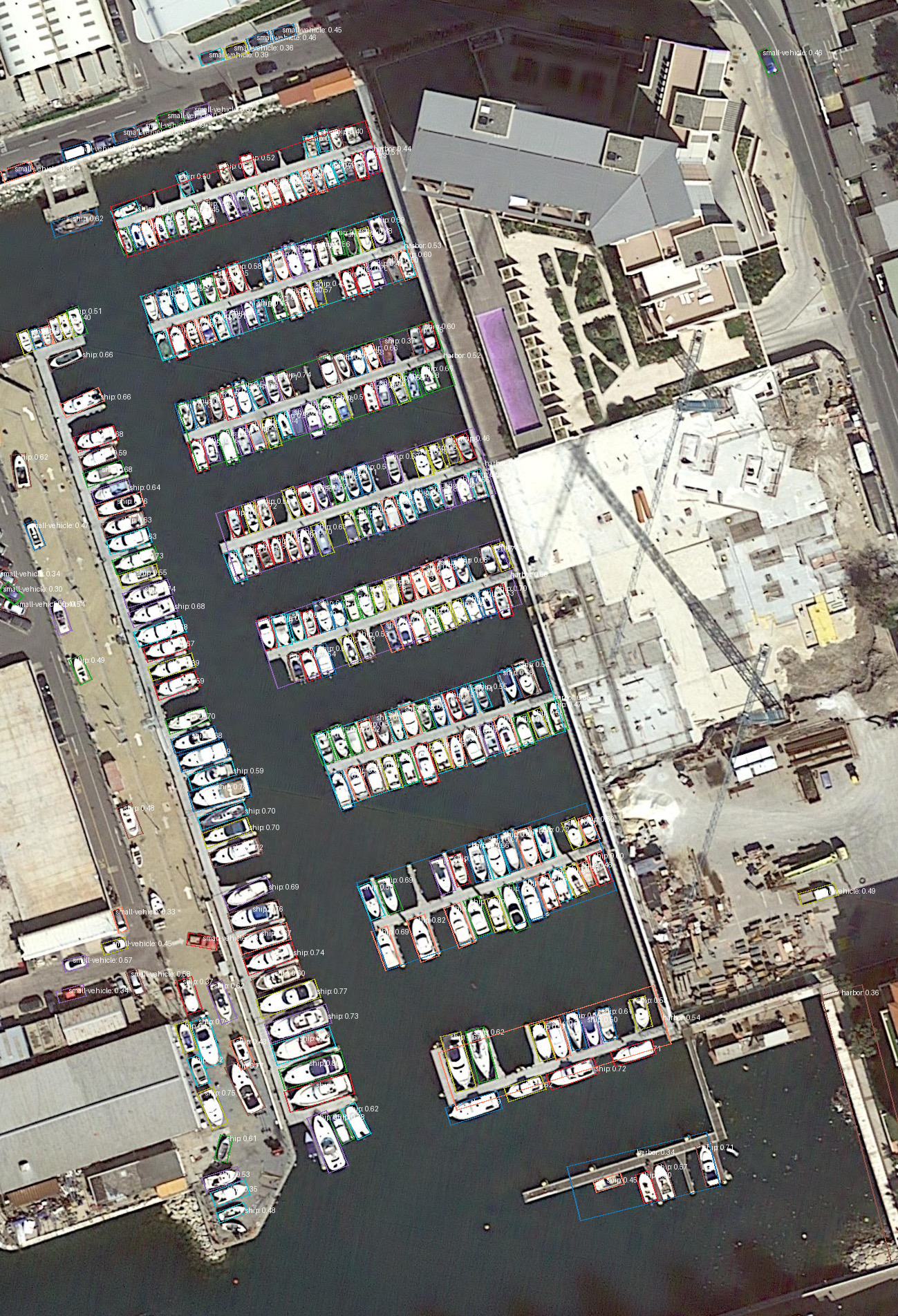
large.jpg harbor | 6 | 2.98 s | 1.73 s | ~1.7× |
On sparse tiles the one-stage head is almost 2× faster. On the dense bus lot the gap shrinks because final oriented NMS (Python, AABB-prefiltered) scales with detection count. The harbor tile (six overlapping windows) still favors FCOS by about 40%.
Neither model needs custom CUDA kernels. MPS just works.
Training wall time (same L4 recipe) Link to heading
The Hub 1× checkpoints were trained on the same DOTA tile recipe: 13,691 train+val tiles, batch size 2, 12 epochs, single NVIDIA L4. Timings are from the published sidecar logs (oriented_rcnn_r50_fpn_dota_le90_1x-725c244f.log, rotated_fcos_r50_fpn_dota_le90_1x-a87b6dba.log).
| Model | Total wall | Mean epoch |
|---|---|---|
| Oriented R-CNN 1× | 1d 12h 22m | ~3h 1m |
| Rotated FCOS 1× | 7h 59m | ~40m |
Rotated FCOS finishes the 1× schedule in an afternoon — about 4.5× less wall clock than Oriented R-CNN on the same GPU and data.
That gap is architectural: Oriented R-CNN pays for an RPN plus oriented RoIAlign on every proposal every step. FCOS is a single dense head over P3–P7. The July ProbIoU post already showed Rotated Faster R-CNN (~58 min/epoch, 11h 30m 1× wall) beating Oriented R-CNN on training cost; FCOS lands in a similar per-epoch band while staying one-stage and anchor-free.
Harbor: sliding-window ships Link to heading
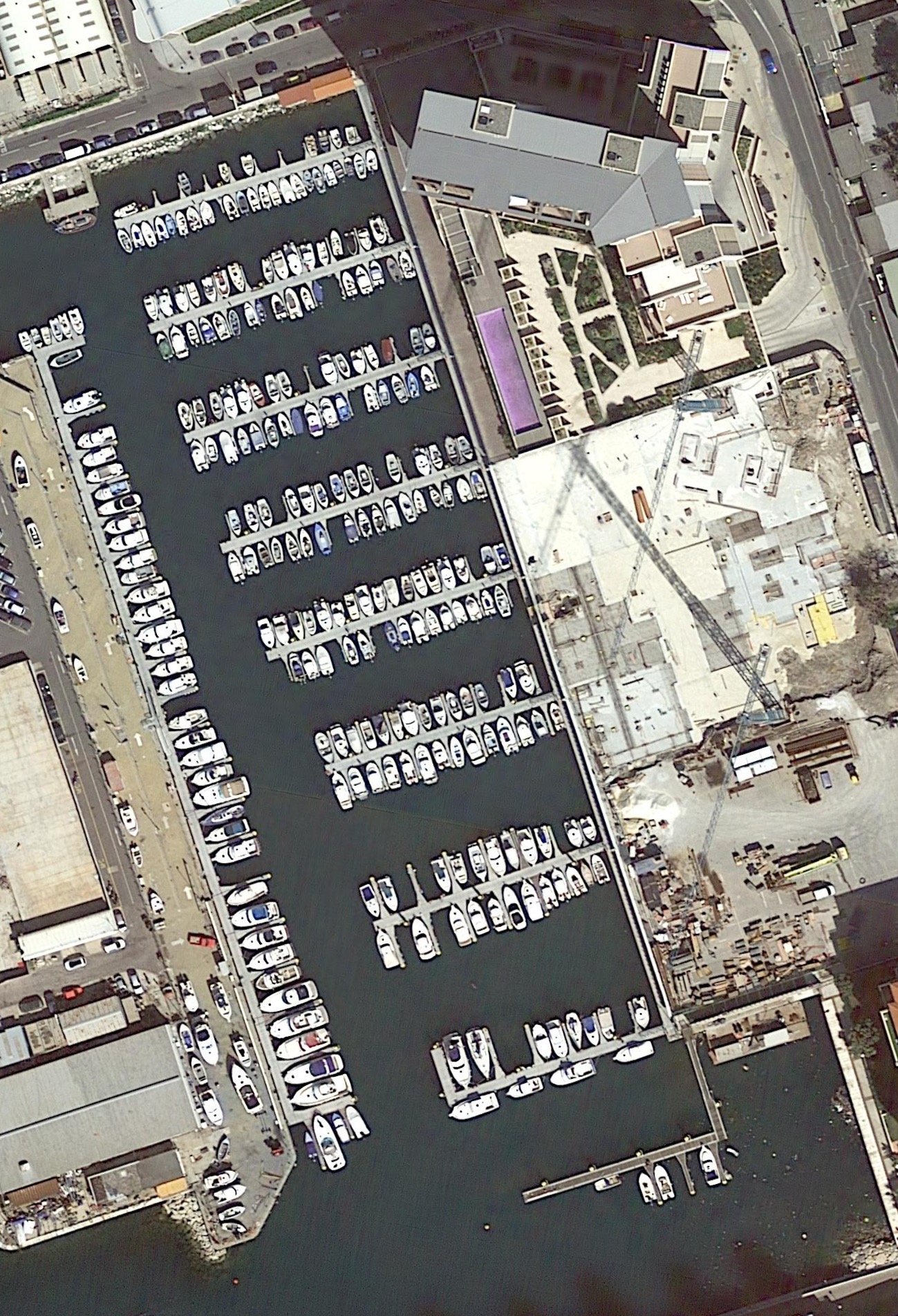
Same large.jpg as the v0.1.1 harbor demo (1299×1904). The DOTA recipe tiles oversized rasters; here that is six 1024 windows with 200 px overlap.
odet image-demo demo/large.jpg hf://rotated_fcos_dota_le90_1x \
  --out-file large_fcos.png \
  --device mps \
  --score-thr 0.20 \
  --nms-thr 0.1
Visually both cover the moored rows; FCOS finishes in under two seconds on this machine.
Planes and storage tanks Link to heading
Two more DOTA val tiles for class variety — airport apron and tank farm — same deploy thresholds.
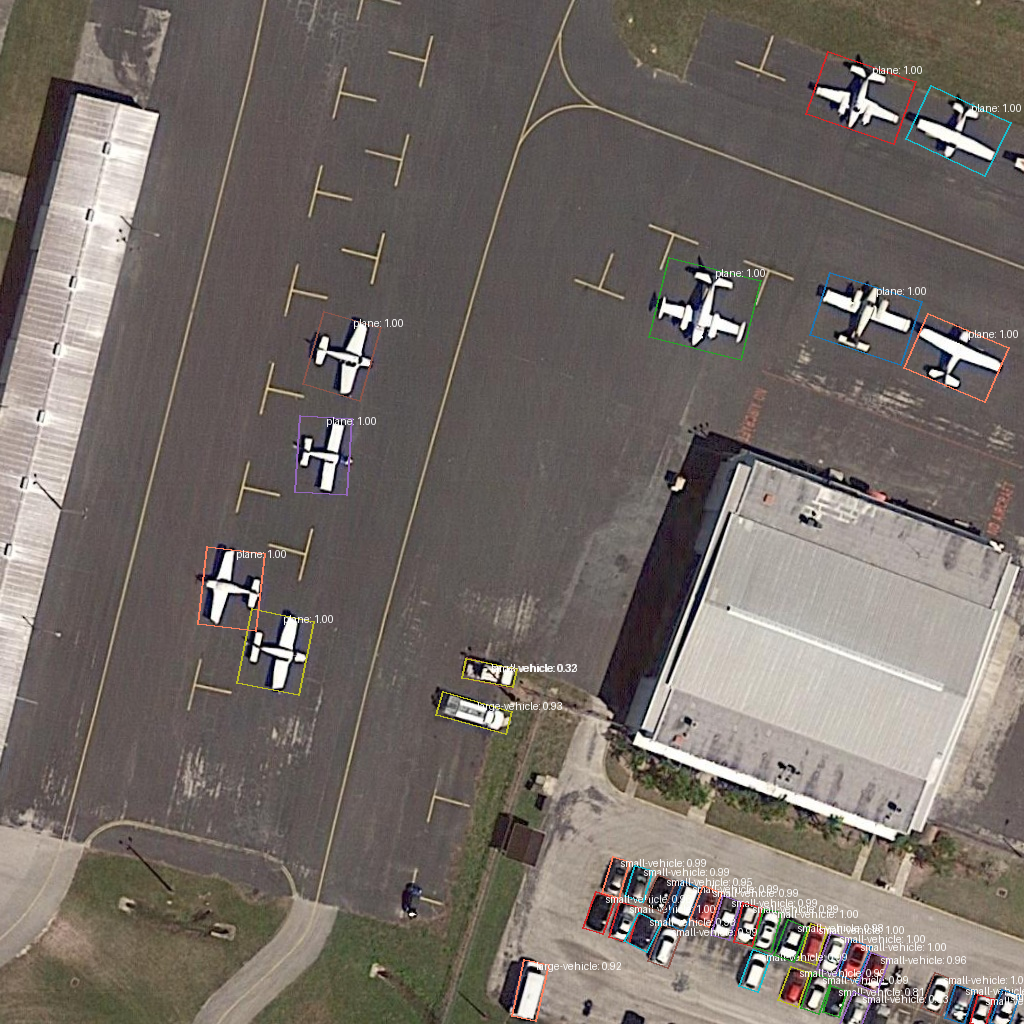
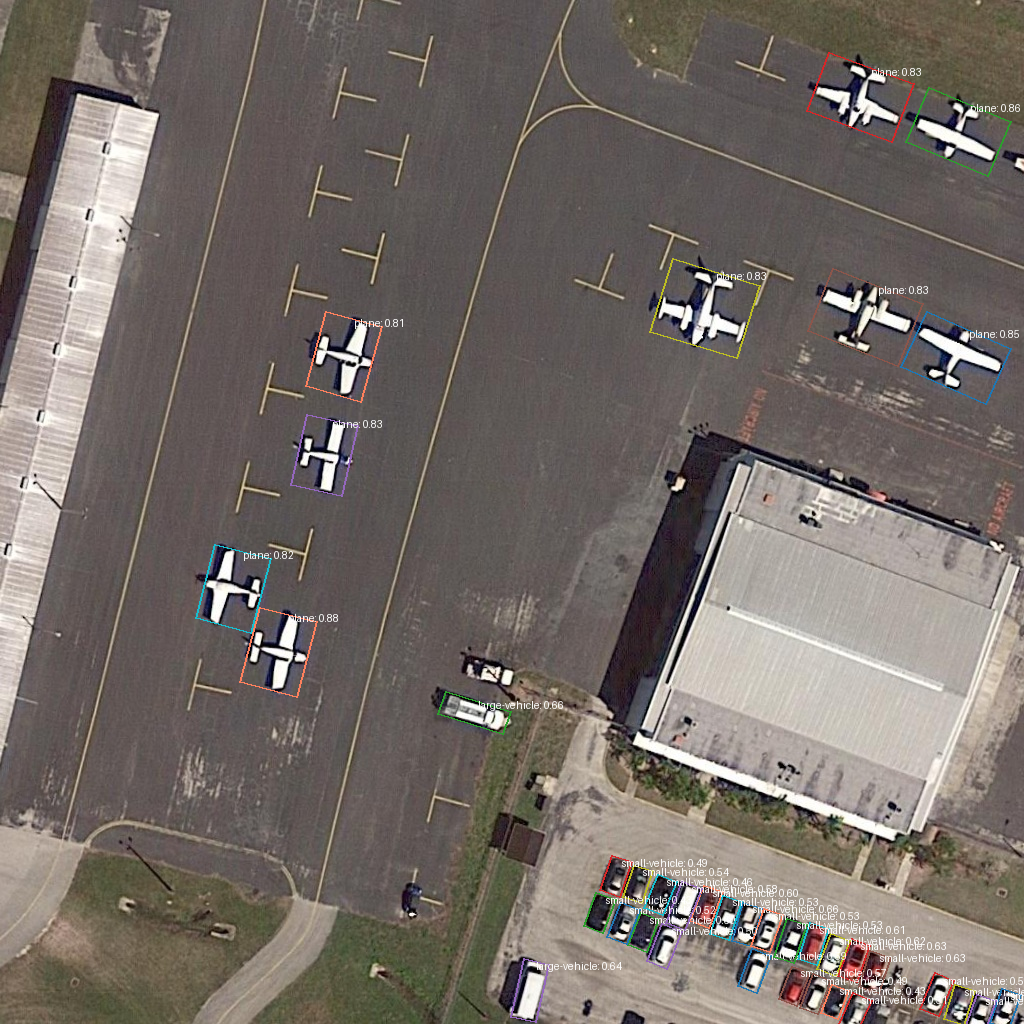
Both find the aircraft. FCOS scores sit lower; Oriented R-CNN saturates near 1.00. Parking-lot vehicles are comparable.
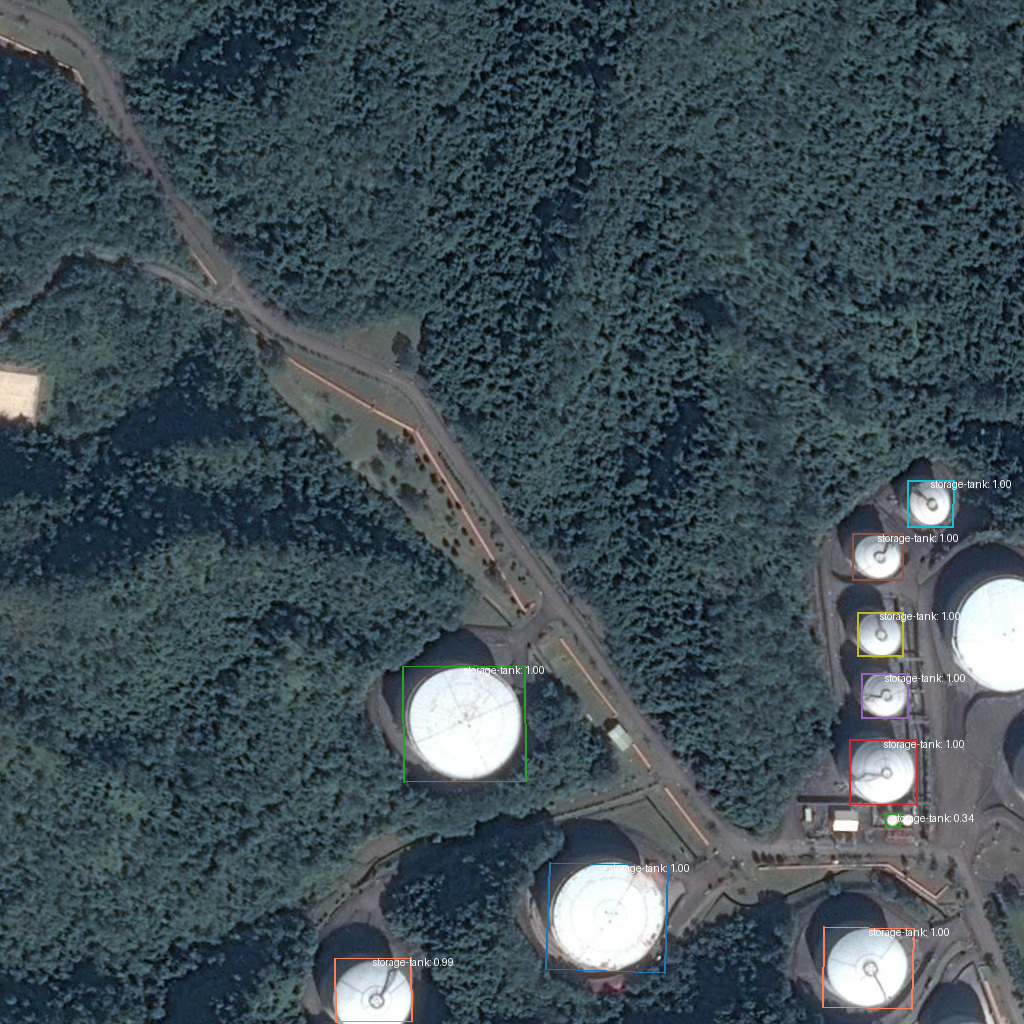
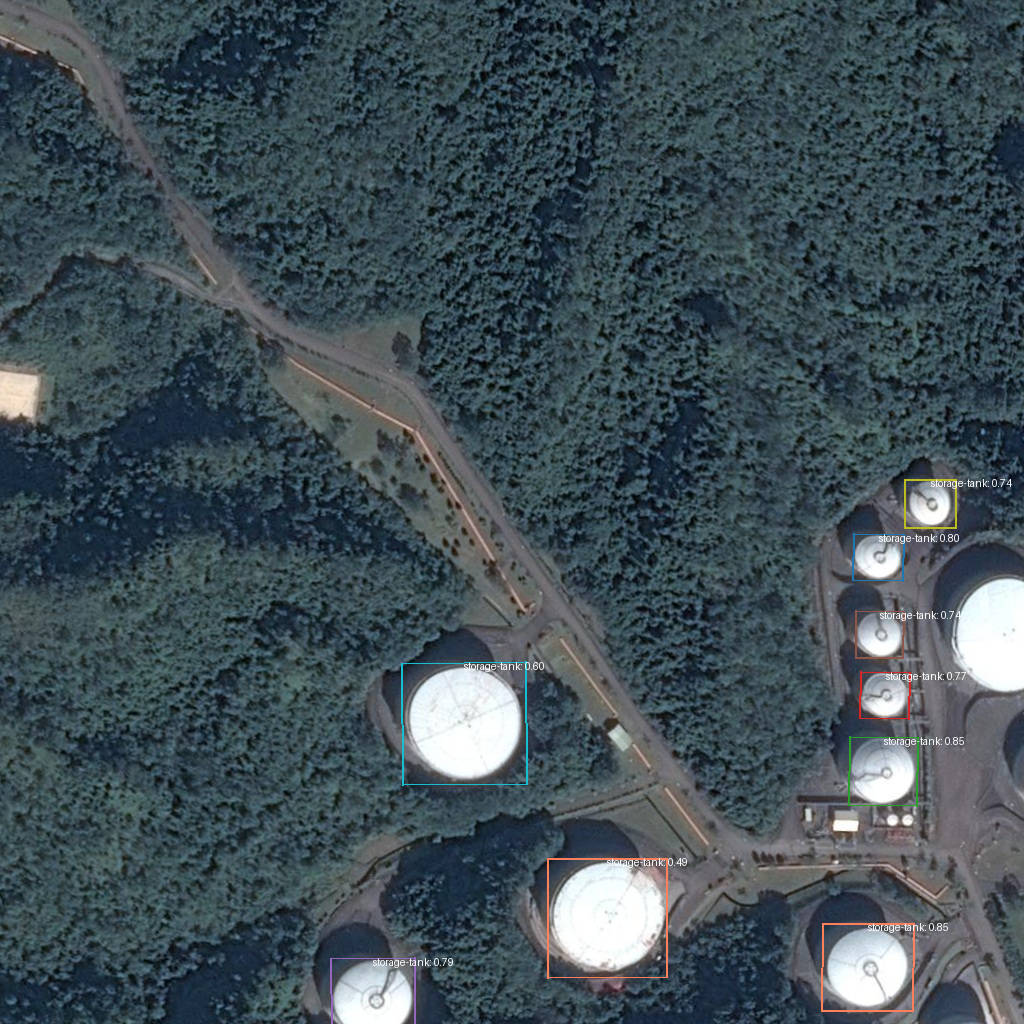
On official Task 1, FCOS is not ahead of Faster R-CNN on tanks (84.28 vs 84.41). On this tile both FCOS and Oriented R-CNN land the visible tanks cleanly.
Commands (copy-paste) Link to heading
# Prefetch
odet pretrained download rotated_fcos_dota_le90_1x
odet pretrained download oriented_rcnn_dota_le90_1x

# FCOS on the June bus-lot tile
odet image-demo demo/demo.jpg hf://rotated_fcos_dota_le90_1x \
  --out-file demo_fcos.png --device mps --score-thr 0.20 --nms-thr 0.1

# Side-by-side Oriented R-CNN
odet image-demo demo/demo.jpg hf://oriented_rcnn_dota_le90_1x \
  --out-file demo_orcnn.png --device mps --score-thr 0.55 --nms-thr 0.1

# Harbor (sliding windows)
odet image-demo demo/large.jpg hf://rotated_fcos_dota_le90_1x \
  --out-file large_fcos.png --device mps --score-thr 0.20 --nms-thr 0.1
References Link to heading
- oriented-det on GitHub
- Pretrained zoo —
rotated_fcos_dota_le90_1x,oriented_rcnn_dota_le90_1x(sidecar.logfiles hold the train timing summaries) - Rotated FCOS recipes
- Previous: Oriented-Det v0.2.0 · macOS Oriented R-CNN walkthrough · Faster R-CNN training-cost context
- Next: A static demo of three oriented detectors